Dear Mr. PIEFOLK,

We don't know one another but I'm also a baker. Bisexual. Cis-Male. Living in the mid-western state of Oklahoma. That's as much as I'm willing to narrow it down. But, I've been a long time reader and my friend mentioned you used to write advice letters. She's an improv teacher who used to know, and respect you in NYC.

I know you're in LA now, but what about some advice?

See, my problem is, I think my straight, white, cis-het boss is hitting on me? He's so homophobic and will make comments like, be a little less gay, or turn down that Gaga and turn up the baseball game, or sometimes he just tells me the customers like me but please be less gay.

He says it to my face. Customers like me a little gay, not a lot.

On top of that he's constantly putting his hands on my waist or grabbing my thighs with both hands when he stoops down below the baking table to get a pan, or a mixer, or a spatula.

Help me out? I like this guy, and he's fair, but I don't like being told "how gay" to be at work, or being touched like that, especially when such touching is followed up with weird jokes like "haha you're lucky it's not after five - I don't know what I'd do if I had a drink or two in me!"

How can I be the right amount of gay, and how do I keep this job, with a handsy-yet-nice boss?

If you can't answer, I understand. You're busy. But may I say? The writing has always been good, but lately, you're exceptional Mr. PIEFOLK. I only hope you're being nice to Mr. Michael.

Love for you, Brother - you can edit this if you need to!

Best,

Hands-free device
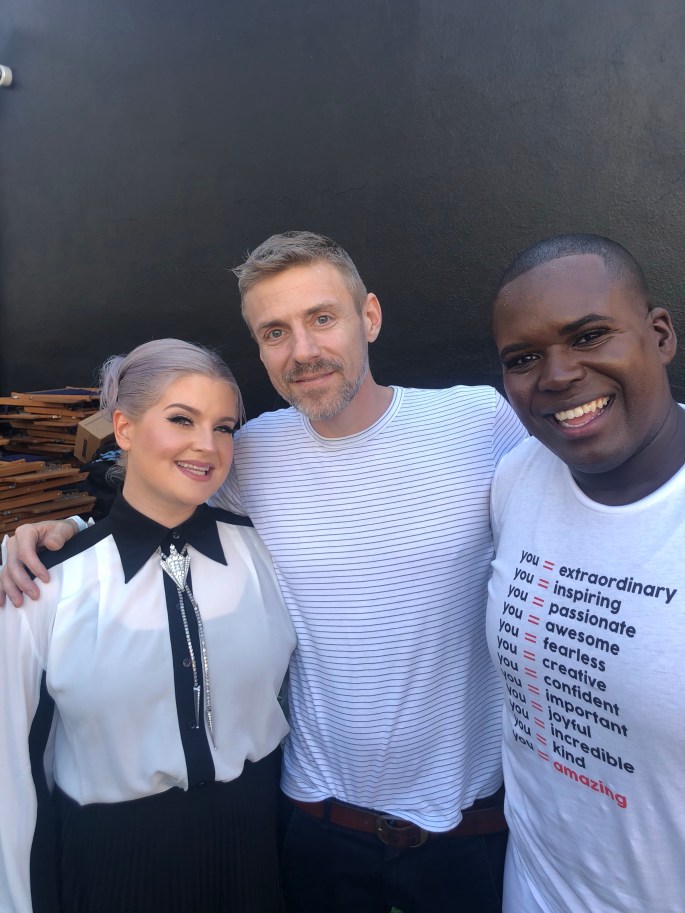
I Love Me event, 2018
Dear HFD,
I’m simultaneously bored and mortified for you. How boring your boss can’t keep his hands to himself. How boring he’s using his “straight privilege” against you in such an unacceptable way.
I almost didn’t use this letter, or answer it at all. I get so much email like this. But something struck me, here. Are you an out bisexual? And, are you out to your boss? If yes, you have lots of options. You can tell him to stop. You can quit. You can hire a lawyer to ask him for a settlement, if you feel he’s violating labor laws (he is).
But, what do you want from this? What’s the easiest, least stressful thing to do? I think the answer lies somewhere in-between quitting and just letting him do whatever he wants. I think you should confront him, and be firm. Talk to him face to face and tell him, no, I don’t like how you treat me and no, I don’t think it’s professional. Be sure to bring up the touching and how awkward it is to have anyone of any sexuality or gender or race – exploit the employer/employee labor contract. Say what’s not acceptable, and tell him you’ll give him a few weeks to think about it and adjust.
After a few weeks, if you think you can tolerate the new version of him, then mention how much better he’s behaving. If you think he needs improvement, you can point that out too – just always frame it as “us working together better” rather than “here’s a list of my unreasonable demands.” You get the nuance? It’s the same list, is what I’m saying.
If, however, after the period of adjustment is up, and you still feel unacceptable behavior is happening, explain you need a leave of absence to contemplate other options. If he fires you, you have a strong lawsuit claim, in most states.
Last pieces of advice? Grow a thick skin. Don’t take any shit. Keep your side of the street clean.
I hope this helps you, and that you stay happy in your situation. Believe me, it’s easier than running after a settlement that may never materialize. Don’t forget, he can liquidate his LLC and sell the equipment/lease at any moment, and not ask you permission or even tell you, until you show up to work in an empty building. What I’m saying is, ask for a reasonable settlement/renegotiation, and you might get it.
Love you, and next time send photos of pie, or noods (photos of noodles, that is).
William slides his hand down the back of my pants. I’ve stopped trying to stop him; I just let it happen.
He distracts everyone, pointing at a piece of theater set I painted, complimenting my technique. Indicating rough-hewn walls, new wood painted to look old, weathered. The patched wood, seamless, blends into the set. I’ve matched his technique, and covered a flaw. One good thing – he does sometimes point out a job well done, despite tantrums and sharp words, despite his wandering hands.
Sometimes he’ll expound upon design elements, textiles, perspective. “What looks luxurious from far away”, he explains, “might look a bit crude close up.” He’s talking about theater design, but he might as well be talking about himself.
Nobody sees him touching my ass. I make a mental note to wear a belt next time.
We work in the hot sun in the Outer Banks of North Carolina on a show called The Lost Colony, and William is our production designer. He is also a theater legend with three Tony awards at this point in his career; probably around fifty years old.
I feel lucky, intimidated. I don’t like his hand on my ass, but this summer has already worn me out, and we haven’t even opened the show yet. I’ve come to think of this unwanted touching as the price of admission, even though this is a job and not an amusement park. They’re paying me to take this shit. Oh, America.
He takes his hand away. I keep painting. Nobody saw. Nobody wants to see these kinds of things, and so nobody saw.
Luckily for me, the show will open in a few weeks, and William has to go check on his touring productions, has to start making drawings for a new Broadway show.
Us college theater folk are impressed by this: Broadway.
We make all sorts of excuses for him because he works on Broadway. To us, Broadway is more than a place, or a culture. It’s a fantasy remedy for our broken childhoods. It’s a totem, safe, and sparkling – brimming with raw potential. William is the gatekeeper to that world.
Even though his hand is gone, I’m still thinking about the groping. Minutes later, pulse racing, I feel ashamed, flushed, worried. I see the writing on the wall. He’s going to push this further than I’m comfortable with, soon.
(Hell, he’s pushed it further than I’m comfortable with now. How am I going to satisfy his ego without letting him have sex with me? I don’t see a way. Maybe I’ll avoid him? Not go to the party on opening night?)
I can take this until he leaves. I’m strong, I say to myself. This can’t break me. But I do feel ashamed for no reason, which leads to anger. Why should I feel ashamed for any reason? I didn’t touch anyone’s ass.
Should William even feel ashamed? I’m letting him. We are all letting him. Especially those of us who certainly didn’t see anything strange.
Later that night, I go to a party with the other college aged cast and crew members. I feel isolated – a little sad. I miss home and my friends from school, my family. What’s more, I’ve been promoted, and I’m part of the management team now. I’m not just a background actor anymore, because William “saw something special in me” and wanted me to props master the show. It was such a rush when they told me, and the reality of the situation didn’t sink in until much later. “I have to warn you,” the director of the show told me, “William isn’t easy to work with. He can be very difficult.”
Roanoke Island Historical Association vs Employee
It’s not a problem, I told the director, looking him in the eye – I’ll manage.
“Difficult” was an understatement, but I was right when I said I’ll manage. I do manage, and I pull off some pretty fantastic work that season. My team makes new props by hand. Wooden toy butterflies, stuffed Native American dolls, ribbons – odds and ends settlers might bring to a colony in the New World. At one point, William loses his cool over a basket of corn the natives bring as a gift to the settlers. It’s plastic corn we bought at a Joann’s Fabric. I wired it into the basket in neat, tidy stacks. This sets him off – the neat stacks of corn. He claims a squaw would just pick the corn and throw it in the basket. I argue with him. The indigenous people are meeting the settlers for the first time, I say. This is a special occasion. It’s logical someone might have taken the time to stack the corn nicely. If I’m OCD enough to wire it in bundles, it’s not an unreasonable thought that someone a few hundred years ago also had the same impulse.
William is enraged. He rips the corn out, throwing it at me. I duck. It hits another tech crew member in the face, who screams “I’m okay!” even before he registers the pain.
We’re trained to talk in very low tones about whatever insane behavior we tolerate on any given day, but we always follow up with, “I’m okay.” You never saw a more exhausted bunch of people running around telling one another how okay they are. I never did, anyway. But then again, at this point I’m only 21.
I try to salvage the pieces of plastic corn that aren’t torn up beyond recognition. Only part of it was damaged. Nobody will see. I use a hot glue gun, because wiring the corn is not an option anymore – it’s too damaged and there’s nothing to anchor it. I’m worried about the hot glue gun. It’s one of William’s pet peeves, and the senior costume folks warned me he would flip out if he saw that I even had one. I take my chances. They shake their heads and mutter to one another. William abuses the costume department the most. They’re overworked, overmanaged, constantly shell shocked. Still, later that night, after a few drinks, one of the costume designers implies that I’m shaking my ass at William in exchange for special privileges. He uses my secret hot glue gun as an example. That’s how crazy we’ve been made, in only a few weeks. I’m accused of prostituting myself for the sake of a hot glue gun. Welcome to showbiz.
Roanoke Island Historical Assn. vs Employee
The next day he slides his hand down my ass again in the costume shop. I wiggle free.
It keeps up like this. Nobody sees. A few people see, actually, but they minimize it by calling it things like ‘special attention.’ At some point in the rehearsal process I get frustrated. William is treating me like an idiot all day long in front of the entry level tech people. When he’s not doing that, he corners me in musty prop cabins, carpentry sheds, behind wood-paneled dressing rooms. I pull him aside and ask him to stop. I tell him it’s embarrassing to me when he yells at me in front of people I’ll have to manage for an entire summer. He asks me if I’ve ever had a job with a boss before. Yes, I say. He shrugs and tells me I’m on deadline, then he takes away the three helpers he has assigned me.
Later in the day, I ask for an extension. William denies it. I speak up, telling him it’s unfair to expect the same deadline after he’s wasted time yelling at me, taking away my technicians, making me feel small. William calls everyone into a group.
“Attention, everyone! Michael is having a hard time making his deadline, and so now, instead of a lunch break, EVERYONE on the crew will work an hour for Michael.” People are pissed. They want to eat, and maybe relax for an hour or so. The sun is beating down on us. I spring into action. Somehow, even with no plan for what I’d get accomplished with twenty extra pairs of hands, I find something for everyone to do. I separate people with artistic talent. I assign them mini projects. People are tearing rags, slathering paint, sewing things. It’s going so well that William forgets he’s angry and gives me the entire team for two and a half hours, instead of just one. We skip lunch.
People aren’t angry with me, somehow. They get it. We trade horror stories and then quickly mutter how okay we are.
William asks me to dinner at his hotel that night. We can have wine, and if I drink too much I can sleep over. I decline.
At the actors apartment complex the Lost Colony owns, someone is always throwing a party in one of the shared apartments. That, or we meet at a picnic table near a grove of trees and sip beer. They’re nice to me that night. Even if they don’t see what’s going on, they see what’s going on. It doesn’t stop him, but maybe it takes some of the sting away.
It’s okay. I’m okay.
It will be fine once we open.
It’s fine; be professional. Don’t wash out, okay?
You’ll be fine. Don’t worry.
I’m okay.
I Love Me event
I go for an overnight trip with Karl, who is the costume shop manager. He’s William’s right hand man. He lives a couple hours away in Virginia Beach. He’s searching for fabric and buys a little, but isn’t overly impressed with the stock. I buy a few props for my department, but I’m afraid to make any bold moves. I don’t want William’s wrath raining down on me again, and I’d rather come back from the trip completely empty-handed than buy the wrong things. Buying the wrong things will set him into a humiliating rage.
I’m not sure why I was brought on this trip. All the things I need for my props can be purchased nearer to the theater, and I don’t have any must-have items list that have to be sourced elsewhere. Yet, Karl made a huge deal about how driving 2.5 hours to his place was absolutely crucial. We’re on a time crunch. The whole show goes up with only five weeks rehearsal time. We’re three weeks in, and we’re running out of time. I want so badly to prove I was the right choice for this job.
Later, at Karl’s house, we take a dip in the hot tub. This is framed innocently enough, after a vodka tonic or two. Karl makes fun of me for wearing my shorts in the hot tub. He says it’s fine if I just go naked, or in my underwear. I pour another drink – this time a stiff one. He says that his boyfriend is out of town, and that if I want to, we can stay in their room together and have some fun. He’s easily fifteen years older than me, and higher than me on the theater food chain. Or, at least it seems that way. When I point this out he explains to me that it’s fine – he’s the costume shop manager and I’m the props master, so we’re equal. But, he’s worked for William for many years, and I don’t feel equal. He puts his hand on my knee, underneath the water. He squeezes harder when I pull away. It hurts. I pretend to be drunker than I am and stumble to the guest room. I pass out. He doesn’t try anything creepy while I’m asleep, I’m pretty sure.
The car ride home is quiet the next day. William curls up a smile when he sees us walk in together backstage. “How was your trip?” he asks, all saccharine and syrup. I tell him I found a few things, but there wasn’t much selection. “Well I hope you two had fun,” he chortles, “But it sounds like you wasted everyone’s time.” Sure, I say, and hang my head. He wonders aloud how anyone on a props deadline could waste an entire day, and not find anything. As I’m leaving I actually say, “sorry,” and I’m immediately furious with myself. I shouldn’t have to apologize for doing my job. Besides, everyone on this tech crew is trying to stick their finger up my ass. I think all these things, but say nothing. I go back to work.
“I don’t need money,” he says. “People get sleepy after a certain amount of wine. They forget things.” Toying with me, he sneers, and holds eye contact a little too long. “For that matter,” he says, “there are other things, besides wine – that make people forget…”
that day William asks again. Dinner at his hotel. We could have fun, he insists, if we get away from this environment. He wants to know if I like a certain actor. Do I think he’s cute? He’s been coming to dinner and hanging out, too. I point out that it’s irrelevant whether I think he’s cute or not, because he’s straight. William just laughs. “I know ways to get straight guys to relax and give you what you want,” he says.
“I don’t have three Tony awards, a trust fund, and a townhouse in Chelsea, I say.” I’m testing the waters. Being snide about his power, his station. William thinks this is very funny. There’s some sort of twinkle in his eye. He’s not used to someone challenging him. I see for a brief second that to some people, life is just a game. That William is almost bored of winning it.
“I don’t need money,” he says. “People get sleepy after a certain amount of wine. They forget things.” Toying with me, he sneers, and holds eye contact a little too long. “For that matter,” he says, “there are other things, besides wine – that make people forget…”
“I think I have plans tonight,” I say.
I start keeping a journal after that. Maybe other people are going to forget things, I think to myself – but not me. I’m going to remember. I can’t sleep at night, now, so I blow off steam by writing about what’s happening to me.
I reach a state of exhaustion. It’s an outdoor drama, so the work on the set – it’s all done in the sun. We don’t have sunscreen; we’re poor and can’t afford it. We look tanned and young and feisty, but we’re stretched pretty thin. And, I have a psychological exhaustion nagging at me from all the groping and innuendo nobody sees.
“I mean, I can tell it bothers you,” he says. “It doesn’t bother me. William paid me and another actor once to have sex with each other in front of this strange dude, who later wound up investing a lot of money in the show. But, I mean, who cares,” he says with a shrug. “I would have fucked this guy anyway. I wanted to all summer and then I got paid to do it!”
I start to hear absurd rumors that William and I are carrying on an affair. Sure, I say to a straight guy who asks me if I’m dating William. Can’t you see how warm and loving he is to me? Everyone laughs at this, but then they all fall silent. It’s a dark joke, and forces them to confront the reality of what’s happening. After some time, another gay crew member says something minimizing, like, well at least you’re getting attention from a theater legend, and grimaces.
“If you didn’t like it,” he says, pausing, challenging me, “You’d tell him to stop.”
“Thanks for the solidarity,” I say, annoyed at everything and everyone. I do tell him to stop, I think to myself. In hundreds of ways I have signaled my disinterest. And William knows I’m not interested. It has become a game between us.
Later, a dancer in the show pulls me aside to check on me. He rubs my shoulders and tells me it’s okay. In fact, it could be more than okay. I’m confused, and don’t quite get what he’s saying. William can make or break careers, he says. Not just designers, writers, actors. He has the connections they need to succeed. But he can also drive people away. Spread rumors about them. Make them feel insecure, crazy, alone. The dancer then tells me I should just do my best to stay off his radar, if I don’t plan on sleeping with him eventually.
“I mean, I can tell it bothers you,” he says. “It doesn’t bother me. William paid me and another actor once to have sex with each other in front of this strange dude, who later wound up investing a lot of money in the show. But, I mean, who cares,” he says with a shrug. “I would have fucked this guy anyway. I wanted to all summer and then I got paid to do it!”
Suddenly I feel less comforted. I start talking about sexual harassment. The dancer cuts me off. “Gay people don’t have that,” he says, matter of factly. “Also, who are they going to believe? A theater legend with three Tonys, and everything to lose? Or a blond college kid, with nothing to lose and everything to gain? They’ll make you look like a gold digger or a hustler.”
I walk home feeling bitter. It’s not like the dancer was trying to make me feel worse, but gay people have a way of shitting on one another’s mood sometimes, cloaking it in “honesty” or “concern.” I’ve seen women do it to one another, too. They’re afraid someone they like will get into hot water, and so they project their own fears on to the situation. It’s well intentioned, but it can feel pretty rotten.
Also, sometimes it isn’t so well intentioned.
Part of the problem with William is that he’s actually supportive. Part of the problem is that he knows he’s difficult to work with, and he knows that on some level, working with a brilliant man (he teaches at an Ivy League school when he isn’t too busy on Broadway) is reward enough. And he isn’t wrong. I learn things from him that summer. How to source things. What textures can be replicated with what paint techniques. Color theory. He takes an interest. The unwanted sexual attention is juxtaposed with rants, tirades about work quality. He considers it a privilege to work with him, and he isn’t wrong. His criticism is astute, and unassailable. It’s just that, this isn’t a union job, and most of us are clearing about $95 a week, with a free place to stay. After we buy food, there isn’t much left.
William has stopped trying to hide his advances toward me, and is now openly sexualizing me in front of other people. “I liked your work better yesterday,” he says one day, in front of my support staff, “But then again, yesterday you had your shirt off.” His tone is so belittling and snide, but I’m completely used up at this point. It’s exhausting, the nature of opening a huge show in a short time is enough stress without constant infantilizing, condescending, flirting and gross sexual innuendo. There’s no way around the groping, the little traps he sets with me and his higher ranking support staff – it all adds up to something disgusting, something more than unsettling. An unfair power dynamic, I mutter to myself, even as I know I’m searching for stronger words to describe what’s happening.
My eye starts to twitch, and for six days before we open, it spasms uncontrollably. The programs come out. I’m listed as “props assistant.” When I tell the office staff I was hired as props master, they inform me that William changed the job title, since I was coming in with no experience. I’m infuriated. All of this bullshit, all this sacrificing time I could have been on stage, and I don’t even get the credit on my resume.
I want to scream in his face. Push him off the dock behind the theater where we light the fireworks at the end of act one. I want to quit and sue The Lost Colony for sexual harassment. Still, I know I’m dealing with an industry giant, and I have no interest in being a giant-slayer. At this point, I’d settle for go-along-to-get-along. Even so, I’m compelled to confront him.
“William,” I say, in the costume shop, gathering up as much tact as I can muster, “I understand we have a mutual appreciation. You’re brilliant and I’m very flattered you picked me to nurture this summer.”
“I’m a very nurturing person,” he says, pulling some lace fabric taught, then letting it spring back.
I choose my words carefully. We are alone in the shop. I’m closer to the doorway than him. We are both stressed out. Dress rehearsal is hours away.
“I think there’s much to learn from you.”
“I think we’re just scratching the surface.”
He’s closing in on me. He steps between me and the open doorway.
There’s no way around the groping, the little traps he sets with me and his higher ranking support staff – it all adds up to something disgusting, something more than unsettling. An unfair power dynamic, I mutter to myself, even as I know I’m searching for stronger words to describe what’s happening.
“Be that as it may – I don’t really like what’s going on between us, as far as the touching is concerned. I’m a fun, funny guy sometimes, and I don’t mind some playful banter, but you fondling me in front of the actors and tech crew is so belittling and demeaning.” I pause, choosing my next words carefully. “So, you should know this – if you take it even a little bit further, I will own The Lost Colony. Do you understand what I’m saying?”
He says nothing.
“I’m willing to chalk this up to a misunderstanding. But, there’s a big difference between how people on a sports team slap each other on the ass, and sliding your hands down someone’s pants. And, I think we can both agree, the line has been crossed.”
He says nothing.
“What’s more, I’m sure a judge will see what I’m talking about, and will see that the difference is vast, and absolutely worth quibbling about.”
He says nothing.
“So, how about this? How about, we forget all about it? How about we just continue on with our relationship, and I don’t say anything, and you don’t say anything. How about, if you see something ‘special’ in me, you just foster that for its own sake, and not try to get special perks? How about we have mutual professional respect, and stop treating each other so transactionally?”
He says nothing.
“It’s not that I don’t like you. It’s not that I don’t want to learn from you. It’s that I’m under quite a bit of pressure, in a job I’ve never done before. There are more than 500 props in this show, and I’m responsible for keeping track of their movement every single night, and making sure they return home for the next performance. Plus, we’re overhauling the inventory, and that’s enough to focus on for a hundred bucks a week. If you really think I’m such a special mind worth developing, then that should be enough on its own. I don’t owe you more than that. Are we clear?”
He says nothing. One of his assistants walks into the room. William clears his throat.
“Are we done here? Did you say you were stressed out? Don’t you have props to attend to?”
I certainly do, I think to myself, and I leave. But, instead of going back to my props cabin, I head off to the stage manager. We have a chat about William and the conversation I’ve had with him. About how I think I can last the summer, since he’s leaving soon. About how she is willing to support me if I wind up pressing charges. About how I don’t think that will be necessary. About how I want to preserve my chances for a career in theater, but I can’t allow a man to keep doing these things to me. She is kind and understanding.
The show opens. There’s a party. William leaves for a while.
My eye stops twitching. Everything settles. I’m okay.
We’re a
ll okay. Oh, it’s fine. We’re all okay.
We all relax into a simple routine. It’s almost just a memory.
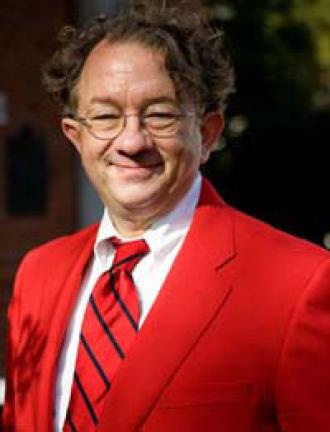
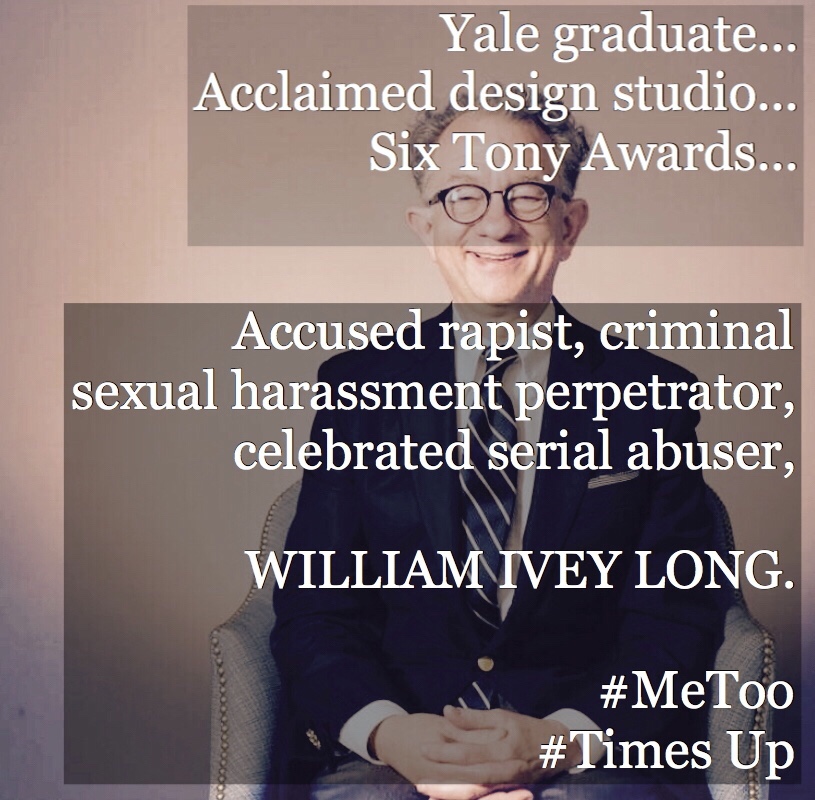
Six time Tony Award winner and corroborated sexual predator, William Ivey Long
The song posted at the bottom of this entry was born in 2008, in Brooklyn, just before I met my brother for a long work/vacation. Hamburg, Germany! He was on an Academic conference for Computational Linguistics, and I brought my baritone ukulele so I could write a bit. He was out of the apartment most days, so I had time. I was still drinking then, and we went out and caroused the nights away at bars in the vicinity. Mostly gay bars, but some stuff all over the city, depending on which direction the evening took us.
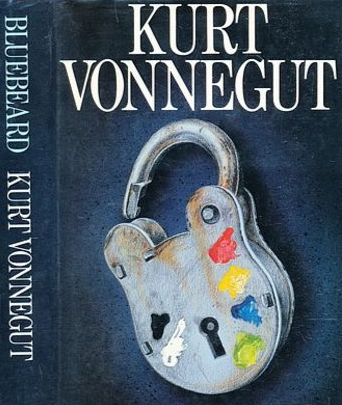
We saw the Rothko exhibit touring Hamburg at the time on that trip. Scotty isn’t much for modern art, but I remembered – Vonnegut was extremely close with quite a few of the guys from the abstract expressionist movement, and Bluebeard is one of the few books I’ve ever managed to get through four or five times. It’s about art, and love, and the forms it can take – romantic or otherwise. Family and chosen family.
About how life expands and contracts – about the trauma of living through WWII – about the bombing of Dresden. Ideas, big and small. Synchronicity. People finding one another, finding joy – even through the process of sifting through body parts in the smoking char of a razed battlefield. Even over years, over decades.
It’s a story of self-actualization.
And so on…
Matty boy, Matty boy, Matty boy
Vonnegut’s Bluebeard references an old legend. A rich man is rumored to be a pirate. He’s upper-strata wealthy. One percent, one might say these days… The type of guy who could live in a castle, but also perhaps might need to go out to sea for long stretches.
Bluebeard falls in love, and a young woman is swept off her feet, dazzled by the legend of the rumored pirate king. Very quickly the two wed, and she moves into his cliffside fortress.
“You may have access to any room in the castle,” her husband tells her on their wedding night, “but you may never enter the chamber attached to the far end of the cellar.”
The woman doesn’t think much about swearing such an oath. What could be so alluring about the cellar, anyway,? She shrugs – men must have their secrets, she reasons, and starts to unpack silks, linens, lace from the oaken dowry her merchant father managed to scrape together.
The story is told in pieces, in circles, like all good epic tales.
Eventually, the wife realizes she doesn’t care where the money comes from. It’s okay if he has foreign business in far off lands, or is a cutthroat pirate, marauder of the high seas. We all have blood on our hands, she thinks to herself one day, when she watches her red-faced maid kill a chicken for dinner.
Still, sometimes she makes the trip to town for fabrics or sewing notions. Invariably, she hears whispers… other rumors muttered under the breath of the townsfolk.
Bluebeard’s first five wives had all died mysteriously, and hushed tales of her husband’s brutality toward his business rivals seeped into her carefree days in town, at the tailor, waiting for the cobbler, enjoying a lunch of kidney pie at the clapboard inn and tavern.
I have to know, she says to herself.
She watches, waits, observes. Finally figures out which key on the big jangling ring opens the antechamber. This happens over years and years. Her husband goes away. Soon after, she insists she needs the butler’s master key ring, then disappears.
Starting in the attic, she moves down toward the basement, mentally memorizing each key, scratching it off the list in her mind. Intermittently, her husband comes back from conquests, mergers. His wealth is growing still more vast, and the jewels, the satins, ivory combs he bestows upon her make her flush with vanity.
Soon enough, though, he”s off on another adventure. She’s left alone with a growing trove of treasures, and a burning need to find out the looming secret tucked away in the cellar, far beneath her quarters. She feels conflicted, sitting inside her warm chamber, fondling the iron circle, counting keys, checking them off one by one in her memory.
She knows her husband’s wrath can be severe, and is terrified he might get angry, divorce her, cast her out. Still, she’s driven by the rumors, the curiosity… Why won’t he talk about his first four wives?
Julia Whitehouse always looks good naked.
Seasons pass. They grow closer. She can’t bear children but it doesn’t seem to bother him. They laugh by fires, playing chess, sipping port long into the night. But, he’s gone for long stretches at a time, and the isolation of the castle overwhelms her thoughts. The staff is strident and formal, and while they can be friendly at times, she’s painfully lonely.
And yes, she’s curious. That’s not a crime. People always want to think it a fatal sin, a woman’s curiosity – she thinks to herself. She smiles when she whispers, hell, even Eve was cast out of the Garden for wanting to make applesauce. People have vicious double standards. Even good, kind people.
Anyway. Finally, she makes it down to the cellar. Her husband arrives home from a trip, showers her with kisses and jewels, gets his key ring back from the stone-faced butler, and they have wine- well into the evening, chatting, playing chess, making love. She falls asleep in his arms, and he starts to snore, which wakes her up, and she realizes his key-ring is on the nightstand.
Finally! She creeps out of bed, grabs the key ring ever so slowly. Silently, like she’s practiced.
She creeps down, alone to the cellar, groping around silent, still. She’s terrified, but she’s making no sounds. She’s memorized the shape and sizes of the keys over the years. Moving with stealth and slow determination, she approaches the door – the one area of the house forbidden to her. Even as she finally finds the right fit, and it slides slowly into the lock, she’s sighs relief. Finally. She’s going to solve this mystery and climb back in bed with her loving husband.
Maybe I don’t even need to know the answer to this question, she says to herself. Maybe there’s no why? Maybe why is a useful question, but there’s never really a concrete answer? Maybe, she thinks, I can love him through anything? Even as she enters the dark chamber, as she smells an old rot.
She lights a torch, skirts the edge of the room, counterclockwise. She sees enough to know. The bodies. The bones. The jewels, dresses, letters – some ripped up, strewn, confetti-style on top of headless torsos.
I can love him through this, she says to herself. I know now – he truly loves me. He truly loved them all. The last thing she sees is a shadow in the door, before she drops the torch and the flame dies forever.
She can barely breathe. Her heart throbs in her throat, choking her thoughts. Her ears pound with thrum.
And so on…
Which is all to say, my brother and I wandered around the Rothko exhibit, because he was very nice about not making the entire ten days about his academic schedule, about going to straight bars, about anything more than a chance to reconnect with one another, far from the small St. Louis suburb where we were both born.
I sang the germ, the genesis, the egg of this song to him, loudly, late at night, after we went out drinking and celebrating his latest academic triumph. I don’t know what it had to do with. He’s a computational linguist, and he didn’t seem to need me to hear him present at the actual conference. He said I would be bored and wouldn’t understand all the acronyms and lingo. I was curious, but I didn’t need all the answers. Brothers don’t need to explain things to each other immediately.
It goes in circles, over years. The conversation stays open.
But in Bluebeard, Vonnegut mentions Rothko, or a character very similar to him. Scotty wasn’t too keen on the exhibit but he wandered around, patient with his little brother. I was insanely curious, and made sure to notice the dates.
Its all just rectangles and squares, Scotty said.
Yeah, but there’s an evolution, I countered back.
Yeah, but isn’t it… the same?
No.
How so?
Well, notice how the shapes get cleaner? Notice how the process, the brush strokes, the scope, size, rich luxury – all of it grows and grows over the years?
Sort of… say more?
It gets richer over the years.
Oh, so you mean he can afford more paint?
Sure, but the art gets richer. Bigger canvasses.
And a bigger studio!
And has richer clients?
Exactly! And then…
And then, what?
By this time Scotty and I were at the end of the visit. He reads the last plaque on the last painting. About Rothko’s suicide.
“Rothko’s depression and seclusion were exacerbated by his drinking. In 1970, Rothko committed suicide by a combination of overdose on barbiturates and a major cut to an artery in his right arm with a razor blade. He left no suicide note.”
In final fit of irony, Rothko died just before the final completion of a massive collection of work he called “the chapel.” He had turned his massive studio into a cathedral to color, texture, light. Inspiration.
And so on…
Sandwiched in between two classics. One Folksy, one Fancy
I kept thinking about Vonnegut and Rothko for years after that. I still think about the two men, sometimes. Drawing parallels late at night, when I’m trying to put my mind to bed.
He was best friends with Vonnegut.
They were in the bombing of Dresden together.
They helped each other get rich and famous, and stayed close, even as their family structures got complicated, even as they both abused alcohol, capitulated to despair, became lapdogs to the terror lurking forever, behind their eyes, when they came home from the war. The helpless disgust they both felt, picking through body parts in the quiet aftermath of the bombing of Dresden.
They did everything they could for one another, but they couldn’t process each other’s trauma. Nobody can do that but you.
They were like brothers to one another. They made it through the challenges, helped one another on the journey of life. Through joy, fear, overwhelming suffering. Births and deaths, cycles and circles, and I’m sure they both drank way too much. It’s well documented by the two men themselves and those who could bear to be around them.
I met Vonnegut once when I was in college. He was touring with William Styron and Joseph Heller. Scotty wasn’t with me when I got to meet him. I shook his hand, and tried not to gush like the 20 year old child/fan boy I absolutely was at the time.
And so on…
Literally daydreaming about parrots constantly. Scott is pinching me and can’t get me to stop thinking about these two lovely birds.
This song used to be called Wait. It was about being ready for a big career break and still having to wait your turn.
Eventually, it evolved into a musical theater song I was writing for Thin Skin Jonny. I wanted to make the boys who started my band with me famous. I was writing a musical for all the people who treated me like a brother over the years.
The end of act one was “Wake Up, Thomas.”
This is the circumstance – Micky sings to his lover who is dying of AIDS. He sings about a lost generation, about assisted suicide, about a quiet pain the Boomers and Gen X homosexuals endured as our chosen brothers died all around us.
The song may evolve yet again. I haven’t decided yet.
Please enjoy!
And so on…
Getting better at technology as we go! Whoopsie poops!
“The people who weep before my pictures are having the same religious experience I had when I painted them. And if you, as you say, are moved only by their color relationships, then you miss the point.” – Mark Rothko
jaded

you danced through my head
today at work a man leaned
over and spit on the floor he
doesn’t live anywhere

not the same smile as years
ago my hair curled over my
ears and shined white my
feet with golden sandals

my wings i flew mouth would
smile wet and red baby kisses
skin was smooth, stark white
but not now the rag smears

spit in circles as an arid smile
spreads across my face, dull
touched no more by the hands
of gods, scabs, not scars

hands now grow cold, lines fold
crack to deep set creases fingers
callous hair courser now, darker
knees heal, scabs are now

scars
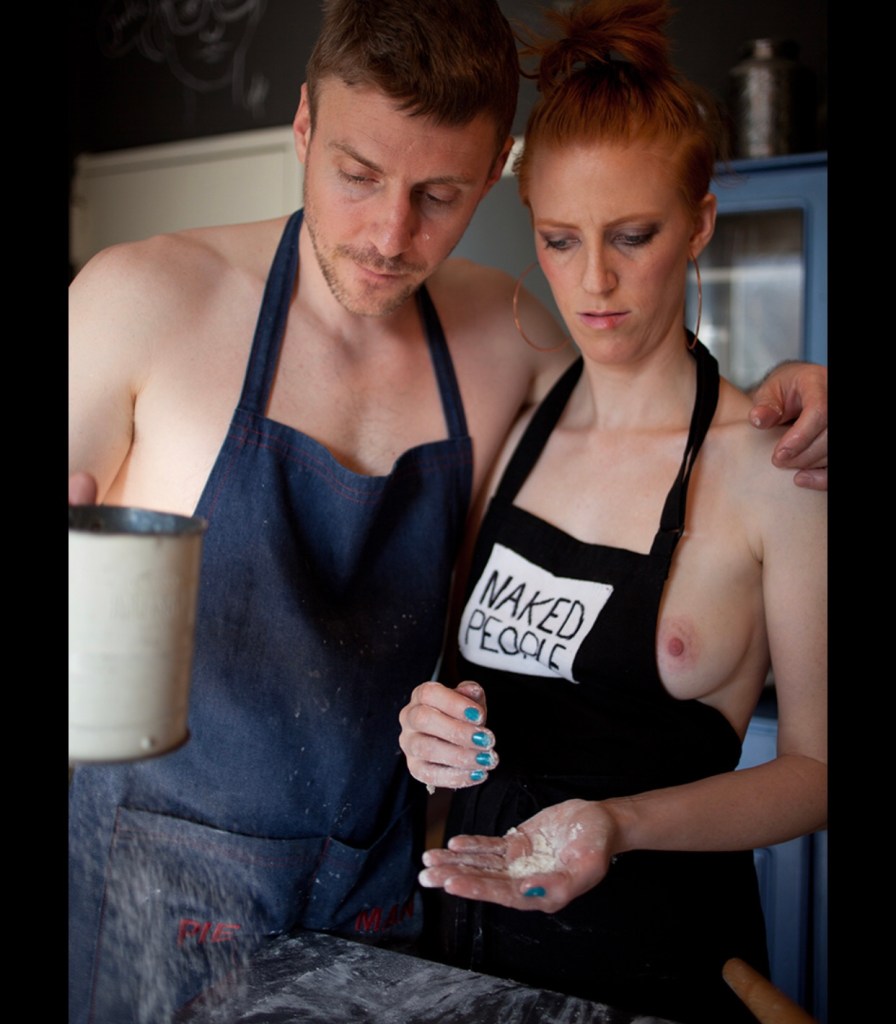
This story came across my desk, with these photographs.
You can find the original running in Falo, a gay art magazine in Brazil, if you speak Portuguese. Otherwise, it’s running here, too.
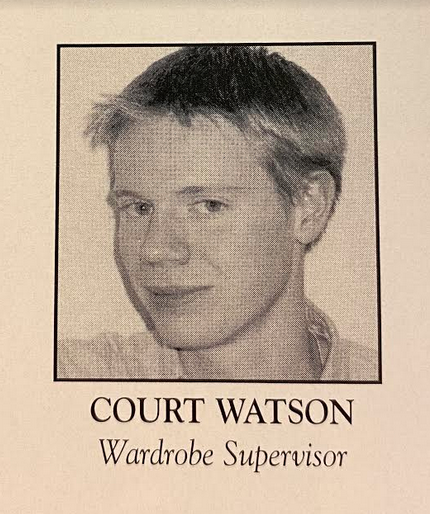
Even though William Ivey Long is not specifically identified by name in this article, the details identify him, and corroborate the pattern of abuse I spoke of in 2018. I’m proud of Court Watson for coming forward, and I hope the theater community continues to support and work alongside him. Here’s the article, reprinted:
(Court poses with his abuser, blurred out, and his unmistakable design)
When I was in college, a famous man took advantage of me. As the #metoo movement burst wide open, I thought that multiple stories about him would come to light. I was genuinely surprised when only one did. Buzzfeed published an article about another man’s story, and how his harassment and assault at the hands of the same famous man caused him such pain that he left the business he loved, and was forever changed. I was changed too, and surprised that Buzzfeed ran the article with only one man’s story. In my industry, I now know that the famous man has a reputation for inappropriate behavior towards those working under him. The Buzzfeed story exploded onto the scene, and then, like so many others, it just faded away. Perhaps the timing was off; the man had recently been the head of an important organization in our business, but the article didn’t appear until after he was no longer on national television once a year at a major awards show. However, the man has had no fewer than one Broadway show running for the last twenty-five years. If you are reading this, and in any way involved in American theater, you already know who the man is.
Within a week after the article was published, I wrote to the Buzzfeed journalist and we spoke about what happened to me. I gave him multiple contemporaneous witnesses to pieces of my story. After sitting on the topic for a year, his editors decided not to move forward with a follow-up article. It is unclear to me whether more men came forward with stories or if I was the only one. When Buzzfeed dropped the article, the journalist put me in touch with an editor at American Theatre Magazine. It seems they were going to partner with the New York Times, perhaps on a story about patterns of abuse in the theater industry. I repeated all of my story to this editor, along with witness contact information. The editor said that they passed it along to someone at the Times, which decided not to run the story at all. I was told, “there’s not enough to go on.” Both journalists recorded my statements. I am certain that what I write here is consistent with what I told them. And yet, none of my witnesses were contacted to verify my claims.
I worked under the man for four summers in college at a summer theater, learning design. My business is one of the last with a codified system of apprentices and masters; masters in my field often have a team of younger assistants, learning the ropes of our profession. I did indeed learn a lot from the man. I can quote maxims that he taught me. I learned how to create a character onstage with scenery and costume design. I learned a great deal about detail, style, fashion history, garment making, and how to use color to direct the eye onstage. I also learned how to be gracious and charming when needed, and a shark when required. One of the hardest lessons I learned is how to avoid allowing myself to be put in risky situations, but I did not learn that until I was already in one.
As a mentor, the man had great power over me. I looked up to him, and when he rewarded me with praise, I felt special, as if my talent and abilities were the reason he wanted to be alone with me. I considered him an icon of Broadway design. I was inspired by his work when I was a child in the audience at the summer theater where we would eventually meet. He designed the second Broadway show I ever saw, and holds more awards for his work than any other designer in our field. In my world, he is indeed a famous man.
Over the course of three summers, the man gave me more and more attention, going farther and farther each summer, building trust and closeness. I was invited to parties at his home. I was offered alcohol, definitely before I reached the legal drinking age. Trips to New York were dangled with offers of rewards for good behavior and potential future jobs. With his power, I was sure that he could have had any man he wanted, and I presumed I was too thin, too gay, to actually be his type. There were rumors that he preferred well-toned young straight men.
My first summer, there were swirling allegations of sexual harassment that actually involved the man’s associate. When the man heard of this, he called my entire department into the executive director’s office and screamed at us that “in the American theater, there is no such thing as sexual harassment. No jury in America would find someone guilty of sexual harassment in our business. We’re all pimps and whores!” Those words are seared into my memory as if he said them yesterday. He actually said that, as the executive director’s mouth dropped, but she remained silent. She resigned at the end of the season, possibly connected to this incident, possibly not. I gave her name to both journalists to corroborate my recollection.
That first summer I worked with the man, I turned nineteen years old, and I looked younger. He asked me my age, maybe the first time he spoke to me directly. He was delighted when I told him, and he shook his head and winked, saying “No, you’re not. You’re a fifteen year old boy!” And he flitted away. At the time I was flattered and charmed by his eccentric flamboyance. Now that we have a shared understanding of “grooming,” I know this is where it started for me. Within a week, I’d called my mother from a payphone to check in, and proudly told her this story. She chuckled, but was unsettled. Even though this was literally twenty years ago, she remembers. I gave her contact information to both journalists. She was never contacted.
The next summer I was rewarded with a promotion and a pay raise. It was made clear to me that the man had been consulted and was responsible for my increased responsibility and compensation. The man was more present that summer, and I was invited to weekends at one of his vacation homes, where, still under age, I was given too much to drink. One of his New York assistants, easily twenty years older than me, took me to an upstairs bedroom and we had sex, which I did think was consensual the time. I was mortified the next day when the man licked his lips as he recounted what his assistant had told him about our encounter, in grotesque detail. It was as if the assistant had given me a test run.
My direct supervisor was also at the vacation home and saw my distress. She warned me to take better care of myself. She knew the rumors of the man’s behavior and was concerned for my welfare. I’m sure she remembers it even though we are not in close contact. I was able to find her contact information and provided it to both journalists. To my knowledge, she was never contacted.
The third summer I worked with the man, I was regularly invited to his home to set up for and attend lavish parties, with countless mint juleps in antique silver cups. Halfway through the summer, I became old enough to legally drink alcohol. I was dazzled by the posh guests at his parties, including actual royalty. The man had recently won additional major awards. He was on top of the world and deigned to include me in his glittering universe of celebrity and fame. I was dazzled.
Bruce Weber, who has since been accused of sexually harassing multiple male models, had recently photographed the man, and he was in a new limited edition book that sold for hundreds of dollars, well out of my price range as a college student. The man casually told me he had several copies, and he’d sign one for me. He mentioned that they were kept in his upstairs bedroom. I knew I was tempting fate, but took note. Shortly thereafter, I was at a small party a block away from the man’s house. He showed up and gave me special attention. I was deeply flattered.
After several drinks, the man invited me back to his home for a chat about my future and maybe a complimentary expensive signed book. I was not in any way sober, and someone at the party suggested I call it a night. They were trying to look out for me. Instead, the man helped me to his porch. More drinks were poured.
I had been drinking and the man was not drinking; there was no way for me to consent to anything. I remember him exposing his genitals to me on his porch. I remember being guided up the steep stairs to his bedroom, and being told to keep quiet as the man’s mentally disabled sister and her elderly nurse were in the house and asleep. I remember the man telling me that he “had a rubber” and we should use it. I do not recall if we did.
I remember his pasty fleshy body under me. I do not remember if either or both of us reached any kind of climax. I do remember seeing multiple copies of the notorious Bruce Weber book on a shelf by the bed, but I got dressed and left as quickly as possible. I’m sure I was disheveled, and too drunk to drive. I ambled back to the other house alone, and multiple people there saw what shape I was in. Someone was kind enough to drive me back to my apartment. I know exactly who the host of the party was that night, but have not reached out to her in years.
Did I think at the time that what happened was consensual? I am not sure. Was I flattered by the man’s attention? Absolutely. Was I disgusted at what had happened? Definitely.
The following year, I was a senior in college. A master designer was brought down from New York to lead a seminar. I was given a private interview with him where he encouraged me to consider graduate school in New York. I proudly told him of my years of work with the famous man, and he grimaced. Without saying anything unkind, he asked, “Are the rumors true? About the boys?” I was mortified. Not only did I realize that there were rumors in the big city about the man, but that I was not unique. Our community quietly whispered about stories that were similar to mine. I did not confide my personal story to the master designer. After the Buzzfeed article appeared, I reached out to him twice to ask if he recalled that moment, and he never replied to me.
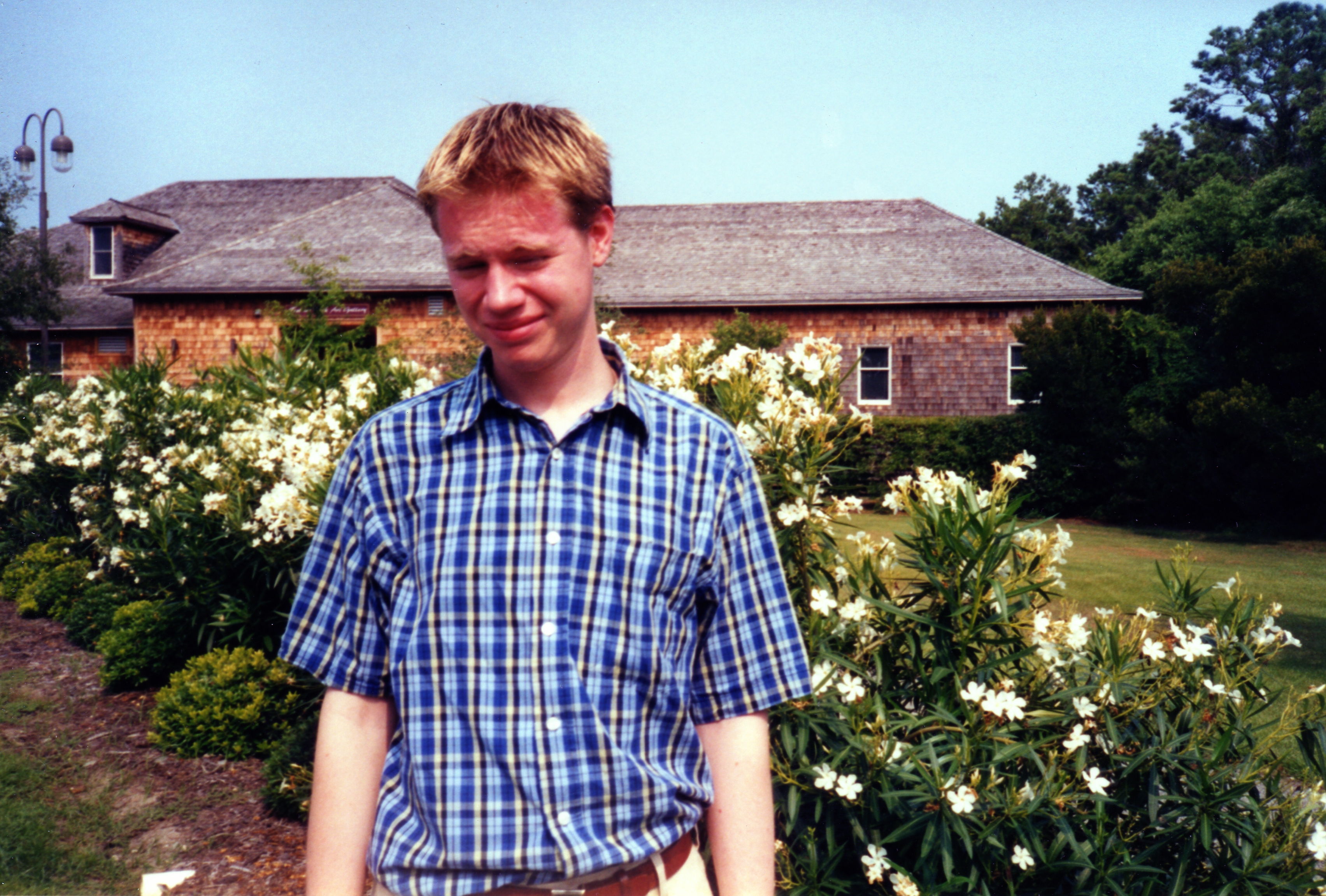
(Court met Long while working for the Lost Colony)
While I did work with the man for one further summer, that night in his bedroom was the last time we were ever together alone. I thought I must have somehow disappointed him. Or maybe he had less power over me now that I had been accepted to a prestigious school in New York and he no longer needed a tempting offer to get me to the big city.
When speaking with the journalists at Buzzfeed and American Theatre Magazine, they asked if there would be a record of a complaint against the man with the company where we worked, but there would not have been. The earlier comment in the executive director’s office made it clear to me that it would fall on deaf ears, so I never complained to anyone in authority at the organization. There is, however, clear record of my four years of employment there. To my knowledge, neither journalist followed up to confirm my four-year employment.
After graduating from college and graduate school, I never sought work from the man, and I did not tell many people what had happened between us. About five years later, I was assistant designing a Broadway show. Costumes for Broadway shows are handmade in one of several shops in New York City’s Garment District. It is not uncommon for the biggest names in design to be in shops at the same time as the shops work on multiple productions preparing new Broadway shows simultaneously. In 2008, our design studio was in one such shop. I had heard that the man would be in the shop that day, and I basically hid in a back office so as not to encounter him. At one point, I needed to go to the bathroom, and the man nearly ran into me in the hallway. He grabbed both of my shoulders and said, “My! Don’t you look great. You’ve finally gone through puberty!” He winked and continued on his way. I’m not sure he even remembered my name or where he knew me from. This was the first time I had seen the man in person in five years.
I was deeply shaken and went back to the office to try to collect myself. My supervisor had seen what had happened and checked to be sure I was okay. I was not okay. I did not go into much detail, but enough for my supervisor to be disgusted with the man’s notoriously inappropriate behavior. My supervisor made sure that I did not cross the man’s path again. I was surprised by how shaken up I was, and I left work early that day in spite of pressing deadlines. It was the first time I’d really stopped to think about how I felt about what he had done to me. I gave my supervisor’s name and contact information to both journalists. He was never contacted.
Afterwards, when the man had his portrait unveiled at Sardi’s, the theaterati restaurant in the heart of the theater district, the man’s associate, from the vacation home encounter, invited me to the ceremonial party. Perhaps I was trying to convince myself that I was able to move on from what had happened years earlier, so I went. I did not encounter the man personally, and I do not know if he saw me there or knew that I had been invited. I was proud of myself for not being too rattled to attend. This man’s presence in the theater world was just a fact of life, and I made an effort to teach myself to be okay with him being around if I wanted to survive in my field, even if I never wanted to work with him directly. To me, it felt like a victory that I could attend his party without breaking down. Now that I know I am not alone, I wonder how many other people there were coping with the same feeling.
When #metoo stories started popping up on Facebook, I wrote a brief post, not mentioning the circumstances, but acknowledging that I too had a story. I was surprised when no one named the man. Years later, when the Buzzfeed article came out, many people in our business knew about it and discussed it; they weren’t shocked by the allegations against him, but that there was only one accuser. There was a flurry of activity on a closed group page for people in my industry. My supervisor, who had kept me safely hidden in an office a decade earlier, checked on me to see if I was alright.
Another friend who knew more details of my story began taking screen captures of the comments and shared them with me. One was from a former college teacher of mine. She had taught me to sew and at the time had taken it as a point of pride that her lessons had landed me a job working with the man. She wrote on the board that one of her students had told her, back in 2002, of a very similar story to the man who had told his story to Buzzfeed. I had not been in touch with her for years, but I found her information, and contacted her. I needed to know if she was talking about me, or if the same thing had happened to yet another one of her students. She confirmed that I had told her my whole story. I have no memory of having told her what had happened to me. She agreed to allow me to share her contact information with the journalists to verify my contemporaneous account. She was never contacted.
I also recovered the screen captures of the board comments and shared them with the American Theater Magazine editor. I provided my friend’s details to verify the screen captures. She was not contacted.
I was unnerved by a gnawing pain that my not speaking up at the time had enabled the man to possibly continue his behavior and hurt other vulnerable people. I felt responsible for anyone he took advantage of after not saying anything to management at the time.
After speaking to the two journalists, I attended a Broadway leading lady’s memorial service at the gargantuan Gershwin Theatre. When I saw the man seated in the row in front of me, my heart raced. I shifted in my seat so there was no way he could see me. Again, it disturbed me how much it bothered me to be in his proximity. The Buzzfeed article had already come out, and I didn’t want him to approach or speak to me. I had already spoken to the first journalist and didn’t know if my story would be published or not.
When I heard that the New York Times and American Theatre Magazine would not be moving forward, in spite of my verifiable stories, I was devastated. I spiraled into a depression that lasted several days. It was like a visceral punch to my stomach that wouldn’t go away. Not having space to tell my story pained me nearly as much as coming to terms with what happened to me.
I posted an impassioned Instagram story, without naming names, and several people, friends and strangers, reached out to offer support. I am grateful for their ongoing kindness. The publisher of Falo Magazine reached out to me privately, and asked if I would be willing to write something for him. I’m grateful for the space to be taken seriously, and heard. I am also thankful for his patience, as this has indeed been difficult to write.
All of this begs the question as to why I am going public now. Why public? Why now? Initially, I wanted to use the man’s name, and remain anonymous. That would have been easier with the backing of a major news company. Maybe only two of us have now spoken out about his behavior, but I am confident that there are more of us who he took advantage of. I am certain that speaking out is the right thing for me to do.
Do I expect an apology from the man? No. Do I want to pursue legal action for what he did to me? No. Do I want to be congratulated or called ‘brave’ for going on the record? No. Do I want attention? No, not for something that is so personal and so painful.
Do I want to be honest with myself and my peers in my industry? Yes. Can I allow myself to remain silent any longer? No.
It has taken years to process what happened to me. It has been a journey to know that it is indeed not my fault. Thanks to all who hear this, and a special thanks to those who speak up and speak out with their own stories, whether about this man or others who have mistreated people who look up to them. This behavior should not have been tolerated twenty years ago, and it cannot be tolerated now.
As we are finding is often the case, powerful people play by a different set of rules. Other powerful people cover for them, making excuses for them. The same thing is true of creative people. People allow geniuses to get away with bad behavior that would otherwise not be tolerated. They are forgiven for treating people inhumanely. This must stop.
The man is indeed a genius. He is also a predator.
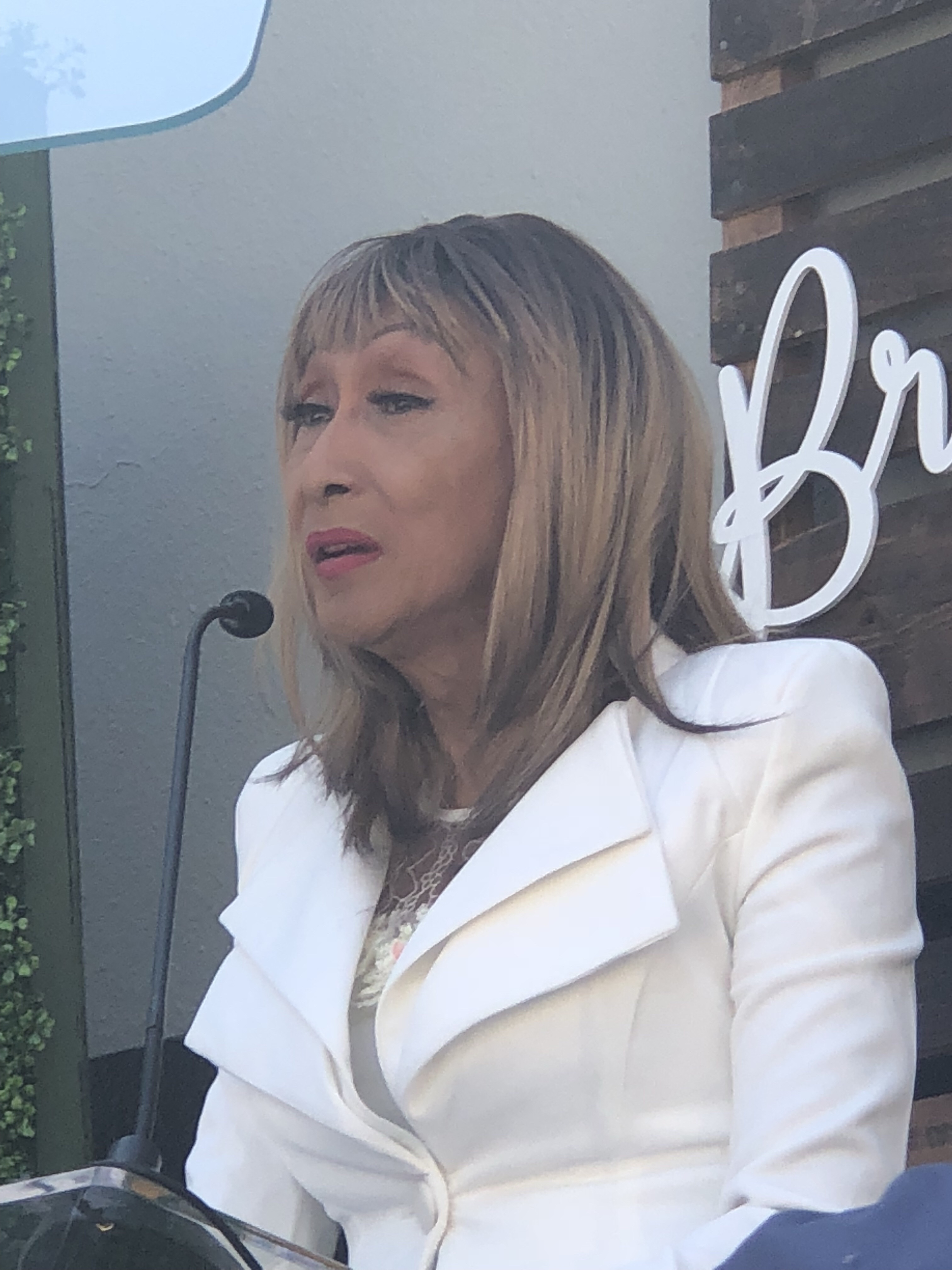
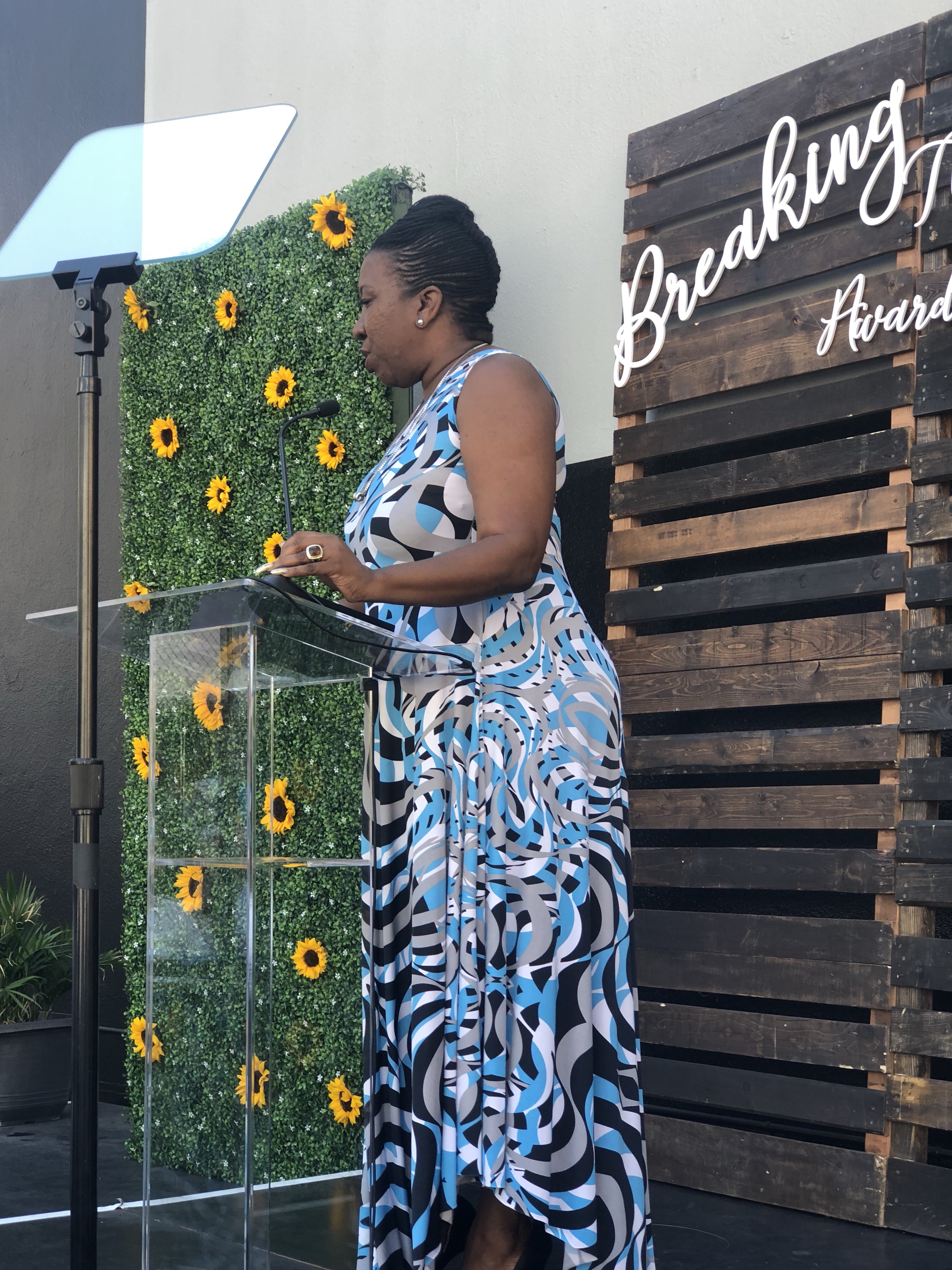
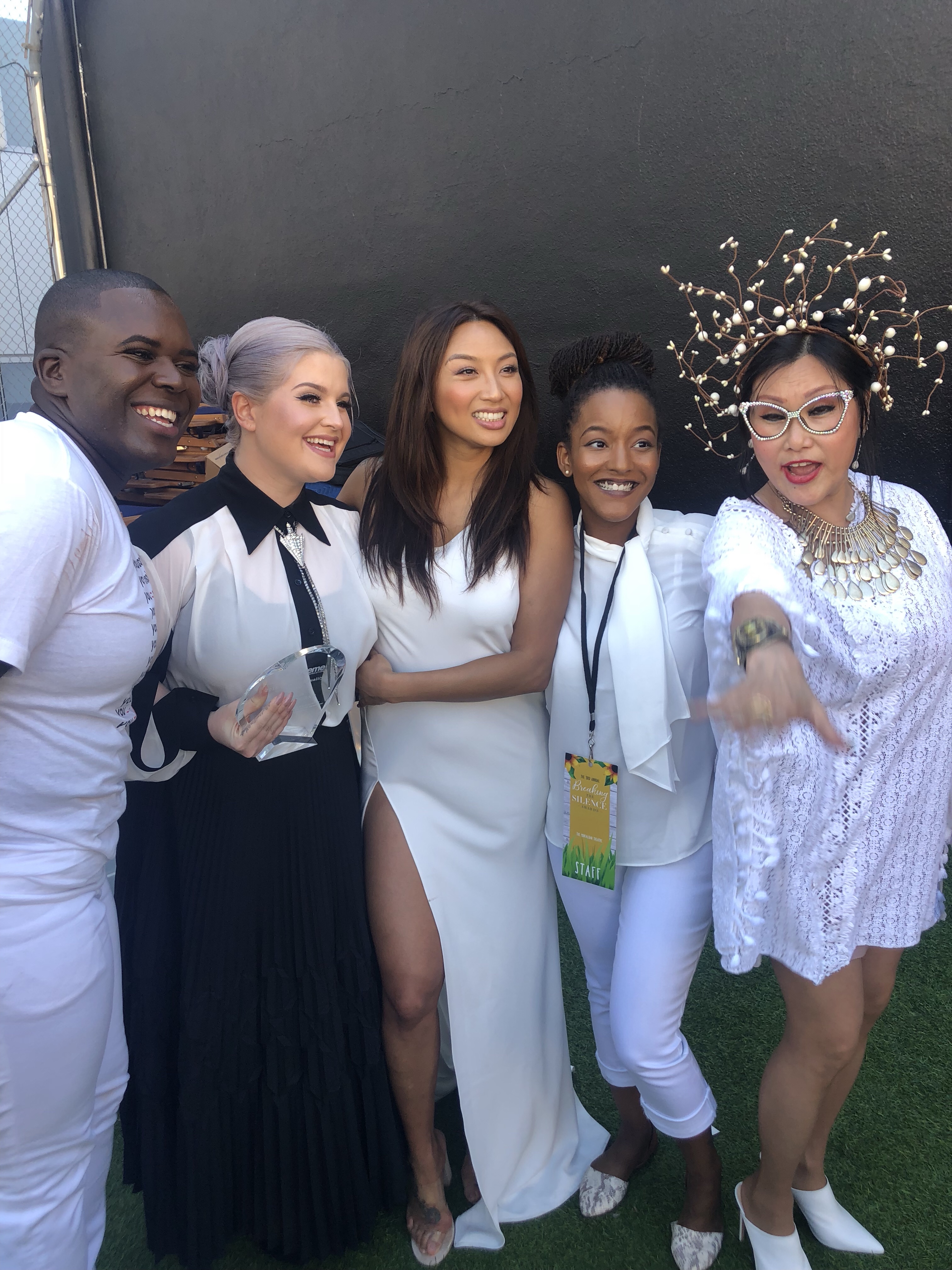
Breaking the Silence Awards recognizes corporations and leaders who use their platform of influence to advocate for Sexual & Domestic Abuse awareness. Since the inception, the I Love Me Foundation has provided supportive services through legal referral assistance, advocate support, financial aid, employment referral and housing assistance to over 1,500 youth, young adults, sex workers, and those in the under-served communities.
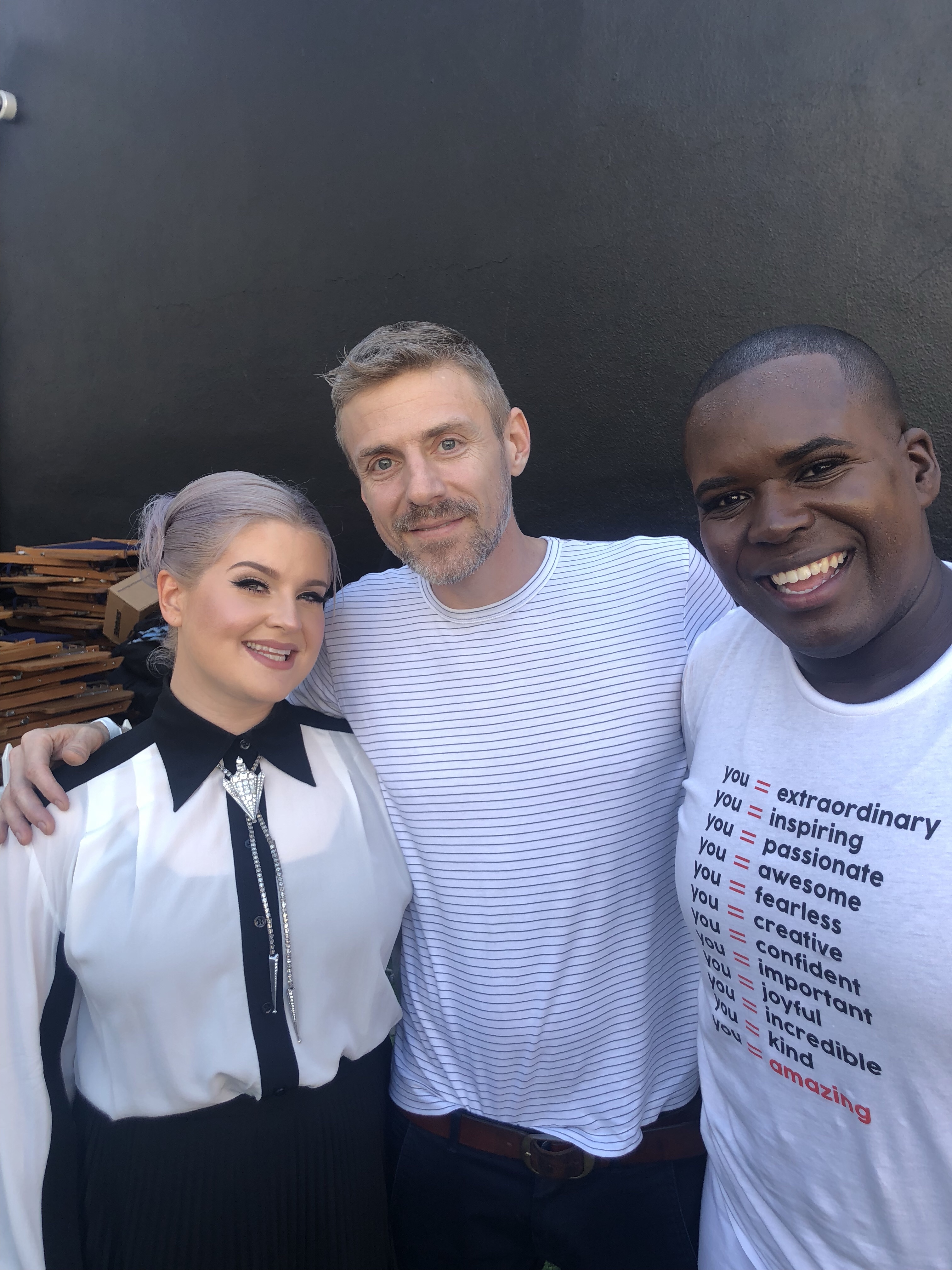
Yes, that’s Kelly Osbourne and Robert Harrell – get excited! But also, please keep your cool. It’s Los Angeles and chill is what we do best, even in the heat of the day. Make no mistake…
The day wasn’t without its lively moments. Yes, we talked about abuse, survival, disenfranchised communities – all things liberals love to talk about! We also had a blast. It was a celebration of #MeToo, #TimesUp, and the transgender communities and communities of color that support their struggle.
It was about female empowerment, humanity, and rejoicing in our ability to tell the truth, so that when the artifice falls away, and we take the narrative back from our abusers, we reveal a truer version of ourselves, which is a boon to our loved ones, to the communities that support us. It was a celebration.
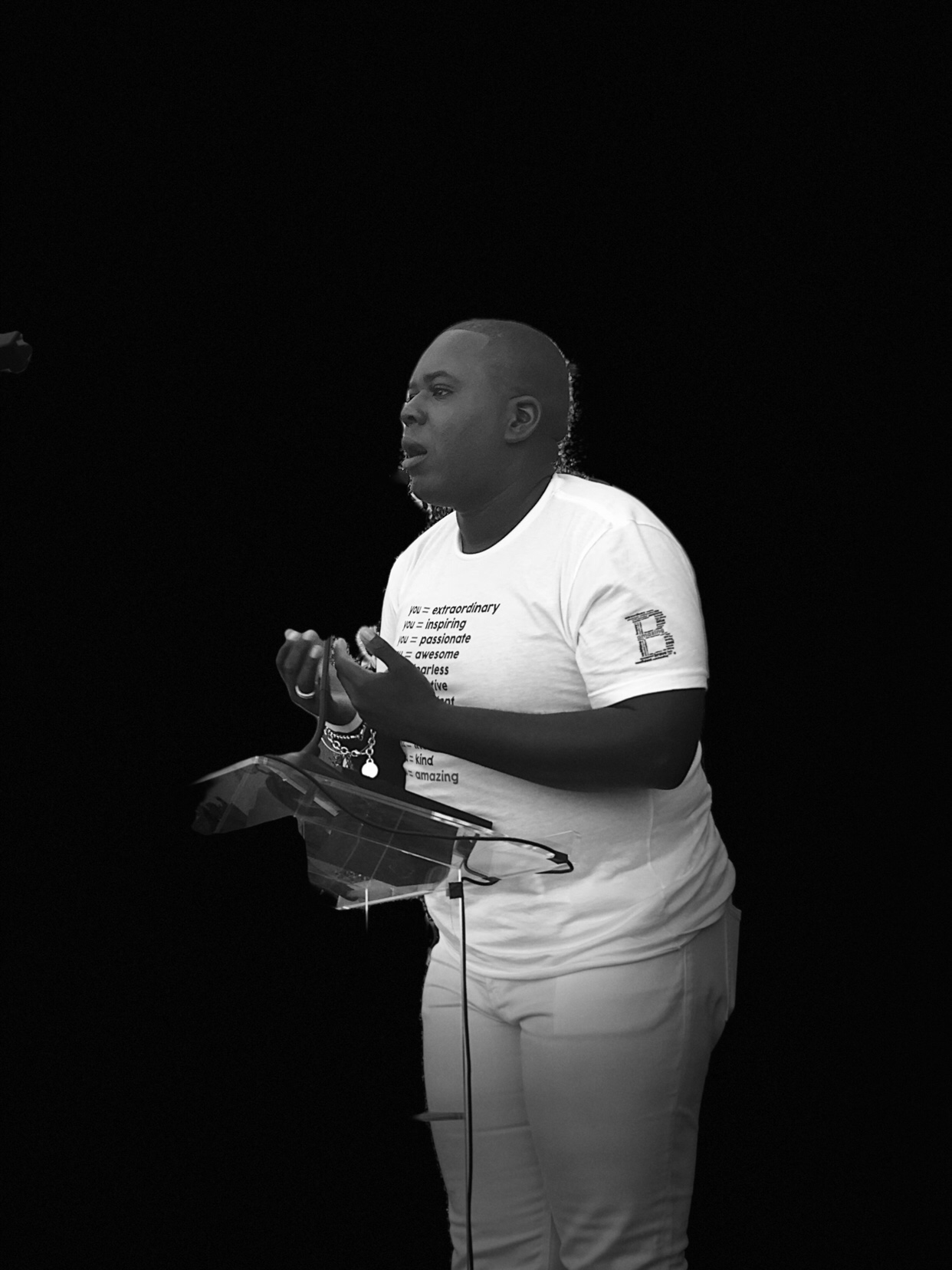
Robert spoke with a tremble in his voice, but a power in his spirit – about how inspired he is with his mother. About how 90% of rapes aren’t reported the first time. How, when he came to her as a boy with his story of abuse, she believed him the first time. He honored her with the Purple Heart Award, and she beamed! She was so proud of her son! He was so proud of her! It was quite amazing to watch.
I teared up, myself, during this part. Something about him emphasizing the first time struck me as incredibly powerful. I certainly wish, when I came forward with my own abuse story, people would have believed me the first time. He made an important point – we have got to retrain ourselves as a society, to stop doing the abuser’s work for them. To stop minimizing, to stop shoving people into “victim” boxes, when what they are doing is actually heroic.
“We must remain vigilant and unified…” -Karina Samala
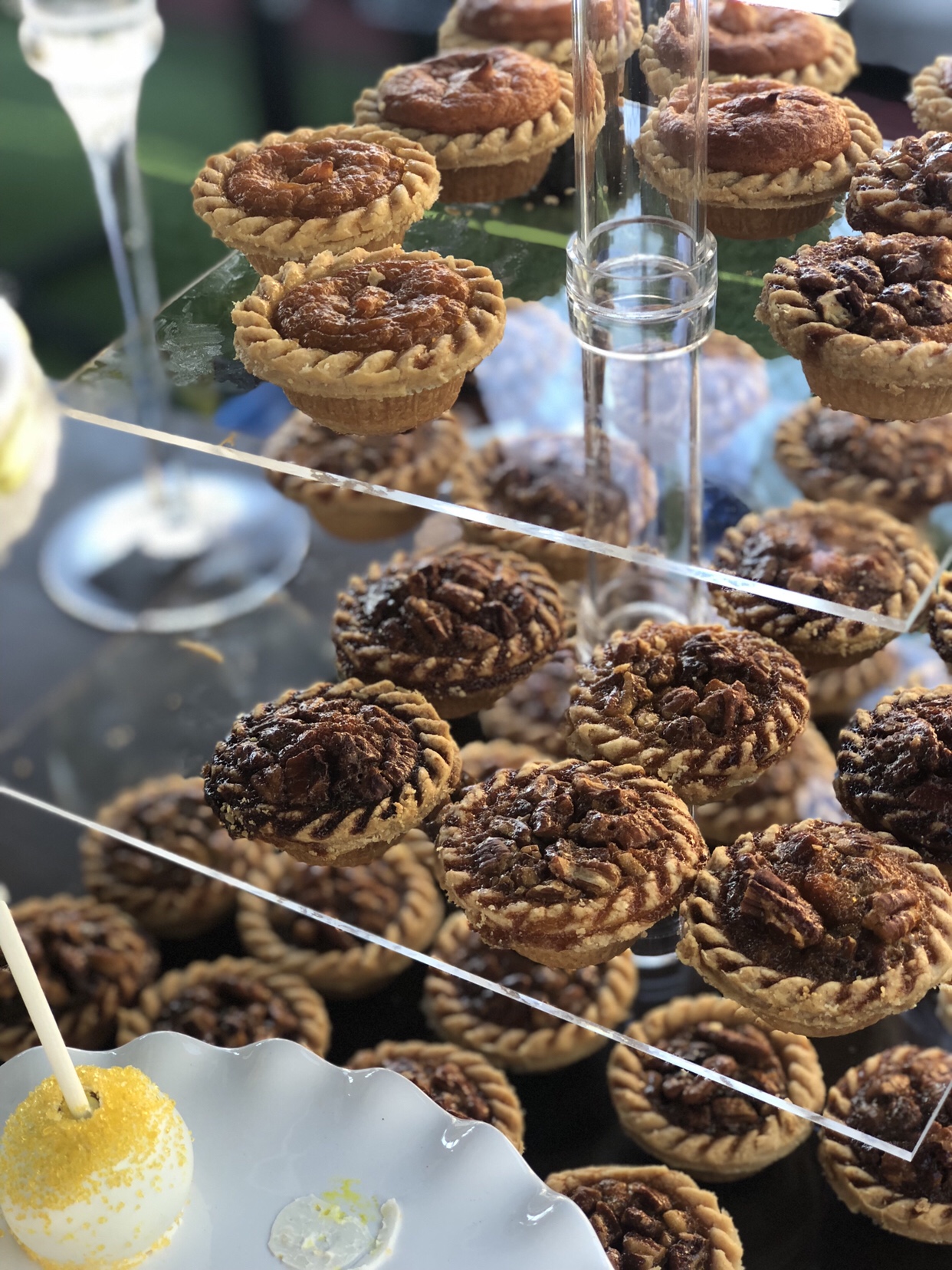
I was impressed with the desserts. The food was all fantastic, and Chaz Dean was the main sponsor. He looked sleek and stylish and his table was extremely well groomed – don’t worry.
Alexander from West Hollywood Gateway, with Desireé, and my date, Steven Reigns.
Steven was named Poet Laureate of West Hollywood. It’s true! Okay, I’ll stop bragging about Steven. I was flattered he asked me. It felt like getting asked to prom. I spent last week walking on a cloud!
“We have just scratched the surface of what’s happening… They have turned #MeToo into a weapon when it’s really a tool… to talk about sexual abuse, harassment, sexual assault. Even saying ‘Me, too’ is an emotional trial, and we are leaving them alone, to raise their hands alone. We will NOT let [the abusers and Republican pundits] turn it into a weapon. It’s a tool. It is not only for women. The future is NOT just female. My daughter answers to they/them pronouns. The future can not be just female because it leaves transgender folks out.” – Tarana Burke, founder of #MeToo
Steven doesn’t know we are on a date but we totally are…
“I am a survivor of both domestic violence and sexual violence. The situation puts you behind enemy lines… [After breaking the silence] I lived an episode of Black Mirror for an entire year. There were friends that turned out not to be friends. There were enemies that turned out not to be enemies. When you say that you demand to be treated like a human being, there are people who come out of the woodwork to insist that you’re not…” – Terry CruiseI was grateful, but my absolute favorite part of the day was watching 80 year old California Representative, Congresswoman Maxine Waters speak with the exuberance and stamina of a much younger person. She speaks with the clear, strong voice of someone who knows she is exactly where the universe wants her to be, because, in part, she bent the universe to her will, by climbing over, tunneling under, or going around any walls her opponents put in her path.
We were lucky enough to walk the five flights of stairs right behind Maxine. We weren’t too thrilled with the no-elevator-situation, but Maxine didn’t care. She may have mentioned getting some exercise in, but she was unflappable and determined, and by the time we reached the top floor we were all joking about what an incredible photo-op it would be, if next time the Congresswoman jet-packed in with Elon Musk. She has a sense of humor, but by the end of her speech, she made a metaphor about how, if she could take the stairs in life, the rest of us could, too. It’s fifteen minutes long, but she doesn’t stop to rest, and she doesn’t let up on the abusers. She is determined to see abusers like Brett Kavanaugh prosecuted for their crimes, and she is still determined to see the impeachment of this illegitimate, corrupt, racist dog-whistle blowing Presidential administration. She, among all politicians, is the only one who makes me want to stay and fight, and not emigrate to Europe. I can’t help it, there’s a 14 year old gay boy inside me that just loves her. She can do no wrong, in my eyes.
I’m incredibly grateful for the day, and for the reminder that yes, I love me.





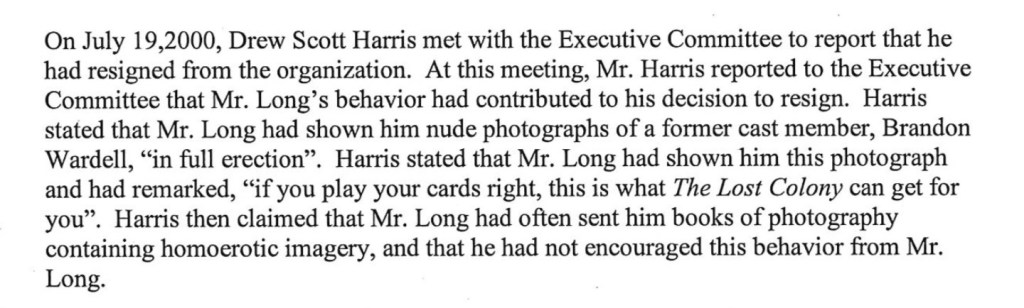
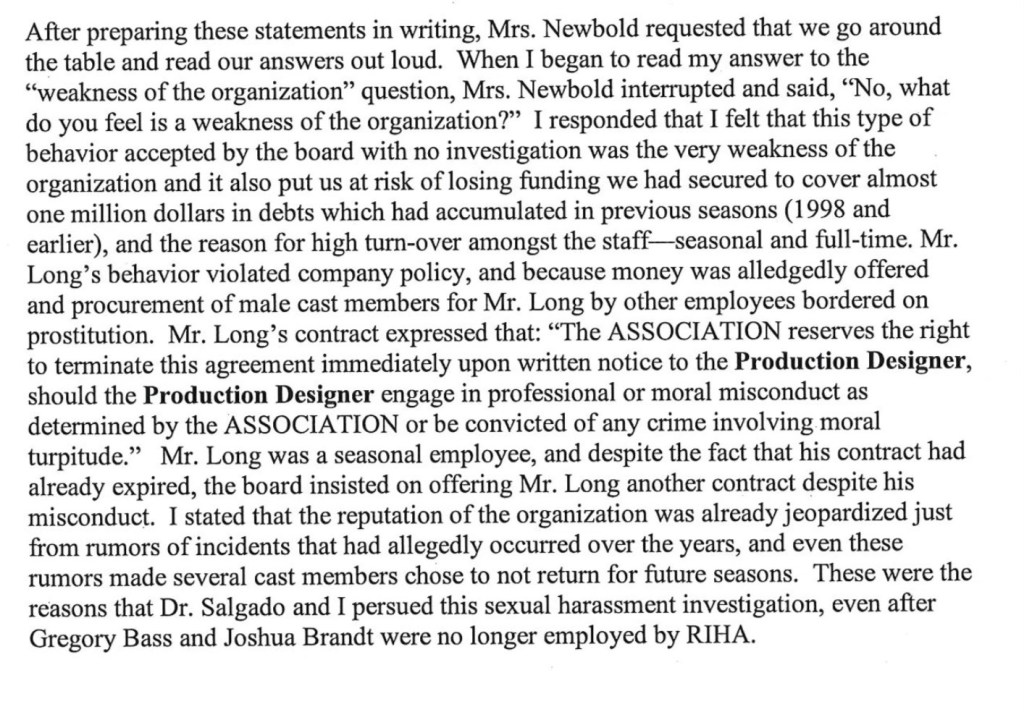


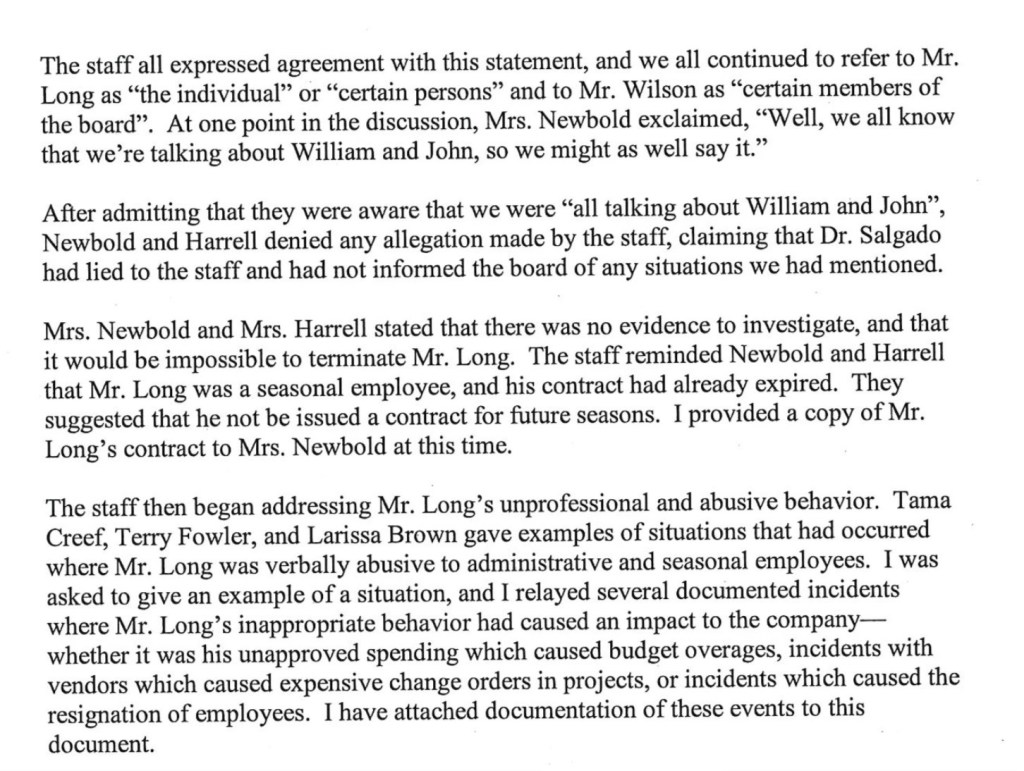




 This story came across my desk, with these photographs.
  (Court poses with his abuser, blurred out, and his unmistakable design)